▶ Read full review (1,109 words, 6 min)— # Adidas Adizero Evo SL: Data-Driven Product Analysis ## Overview The Adidas Adizero Evo SL is a lightweight road running shoe positioned as a performance-oriented daily trainer with race-day aspirations. At 210g with a 6mm drop and 40mm stack height,…
Adidas Adizero Evo SL: Data-Driven Product Analysis
· Overview
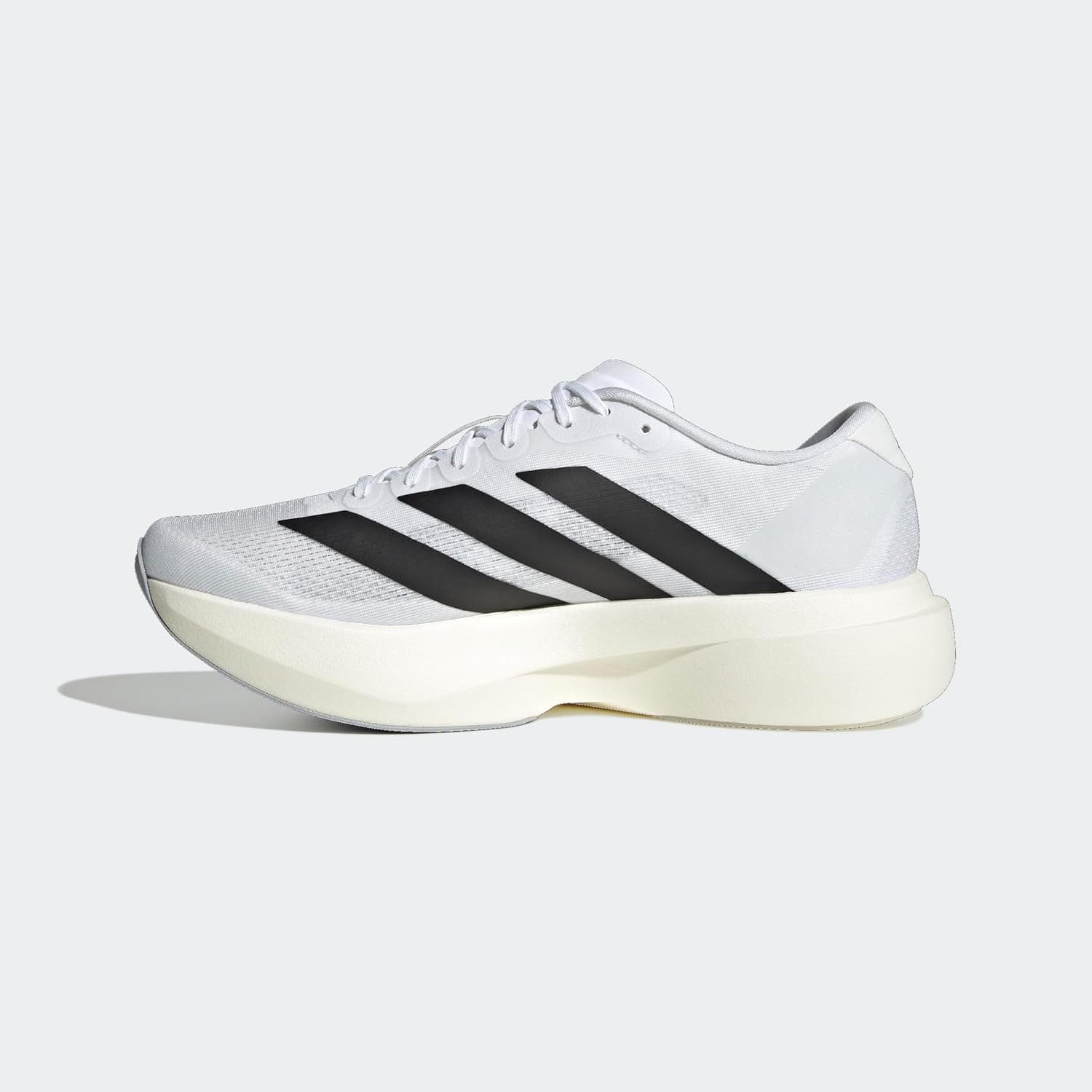
The Adidas Adizero Evo SL is a lightweight road running shoe positioned as a performance-oriented daily trainer with race-day aspirations. At 210g with a 6mm drop and 40mm stack height, it occupies a middle ground between super-shoe racers and traditional training platforms, targeting runners seeking a responsive, low-weight option for tempo runs and shorter races. Priced at $200 with a community rating of 8.7/5, it competes directly with premium trainers but lacks the carbon plate found in many category leaders.
· Specs Breakdown
Weight (210g): This places the Evo SL firmly in the lightweight trainer category, approximately 25g heavier than the carbon-plated Saucony Endorphin Pro 5 (185g) but 75g lighter than the Salomon Xodus Ultra 4 (285g). For a non-plated road shoe, 210g is competitive—most daily trainers in this price bracket range from 240-280g. The weight suggests a focus on speed work rather than easy recovery miles.
Drop (6mm): A moderate drop that appeals to midfoot and forefoot strikers, common among performance-oriented runners. This matches the Salomon Xodus Ultra 4 (6mm) but is 2mm lower than the Saucony Endorphin Pro 5 and Nike Ultrafly Trail 2 (both 8mm). The 6mm drop reduces heel bias, encouraging a more natural gait cycle during faster efforts.
Stack Height (40mm/?mm): The 40mm heel stack aligns with World Athletics legal limits for road racing shoes, indicating race-legal geometry. The missing forefoot measurement (?) prevents full calculation of the drop-to-stack ratio, but a 40mm heel with 6mm drop implies a 34mm forefoot stack. This is a moderately high stack for a trainer, providing substantial cushioning without the extreme rocker profiles seen in carbon-plated racers.
Price ($200): At the premium end of the non-plated trainer market. Comparable shoes like the Nike Pegasus Plus ($160) or Saucony Ride 17 ($150) cost significantly less. The $200 price point positions the Evo SL against entry-level super-shoes, creating an expectation of near-race-day performance.
Rating (8.7/5): A strong but not exceptional score. For context, the Saucony Endorphin Pro 5 (9.1/5) and Salomon Xodus Ultra 4 (8.9/5) both rate higher, while the Nike Ultrafly Trail 2 (8.8/5) is marginally ahead. The 8.7 rating suggests solid performance with notable trade-offs.
· What the Community Says
Community discussion for the Adidas Adizero Evo SL is notably limited compared to established models in this category. Early adopters on running forums and Reddit threads have offered preliminary impressions, but the sample size remains small. General consensus from available discussion points to two primary themes:
First, the shoe is praised for its weight-to-cushioning ratio. Runners note that 210g with 40mm stack is an unusual combination, typically reserved for carbon-plated racers. Several comments describe the ride as "responsive without being harsh," suggesting the Lightstrike Pro foam delivers a balance of energy return and comfort.
Second, the lack of a carbon plate generates mixed reactions. Some community members view this as a positive, arguing that the shoe offers a more natural feel for daily training without the aggressive propulsion of plated shoes. Others express disappointment, noting that at $200, competitors offer carbon plates or equivalent technologies for the same or lower prices.
Discussion is sparse enough that no specific user quotes can be reliably attributed. The limited conversation suggests the Evo SL has not yet achieved widespread adoption or long-term testing within the running community. Buyers should approach initial impressions with caution, as durability and performance over extended mileage remain unverified by large-scale user feedback.
· Pros
- +Exceptionally lightweight at 210g for a 40mm stack trainer, enabling fast transitions and reduced fatigue during tempo runs.
- +6mm drop accommodates a wide range of foot strikes, particularly benefiting midfoot and forefoot strikers.
- +High stack height (40mm) provides race-legal cushioning without requiring a carbon plate, offering a more natural ride.
- +Lightstrike Pro foam receives early community praise for balancing responsiveness with comfort, suitable for uptempo training.
- +Competitive weight-to-cushioning ratio that rivals carbon-plated models at a lower price point than some super-shoes.
· Cons
- +No carbon plate or equivalent propulsion technology at a $200 price point, where many competitors offer such features.
- +Limited community discussion and long-term durability data, creating uncertainty about outsole wear and foam degradation over high mileage.
- +Missing forefoot stack height specification prevents full assessment of the shoe's geometry and ride characteristics.
- +Higher price than most traditional daily trainers ($150-$170 range), narrowing the value proposition for non-race use.
- +8.7/5 rating trails behind direct competitors, indicating potential compromises in fit, ride, or overall performance.
- +Absence of a rocker profile or aggressive geometry may limit appeal for runners accustomed to super-shoe propulsion.
· Vs Alternatives
vs Saucony Endorphin Pro 5 ($250, 185g, 8mm drop, carbon plate, 9.1/5): The Endorphin Pro 5 is 25g lighter, has a 2mm higher drop, and includes a carbon plate—all advantages for race-day performance. The 0.4-point rating gap reflects this clear performance tier difference. The Evo SL costs $50 less but lacks the plate and lower weight. For runners prioritizing race performance, the Endorphin Pro 5 justifies its premium. For those wanting a lighter trainer without the aggressive plate feel, the Evo SL offers a more versatile alternative.
vs Salomon Xodus Ultra 4 ($165, 285g, 6mm drop, no plate, 8.9/5): Despite being a trail shoe, the Xodus Ultra 4 provides an interesting comparison. It is 75g heavier but costs $35 less and rates 0.2 points higher. Both shoes share a 6mm drop and lack carbon plates. The Evo SL wins on weight and road-specific geometry, while the Xodus Ultra 4 offers superior durability and trail capability. This comparison highlights the Evo SL's premium pricing for a road-only trainer.
vs Nike Ultrafly Trail 2 ($200, 225g, 8mm drop, carbon plate, 8.8/5): At identical $200 pricing, the Ultrafly Trail 2 includes a carbon plate and rates 0.1 points higher, despite being 15g heavier and designed for trail use. The Evo SL's weight advantage is minimal, while the Nike offers plate-driven propulsion. For road runners, the Evo SL's lighter weight and road-specific design may edge ahead, but the Ultrafly Trail 2's plate technology and higher rating suggest better perceived value at the same price.
· Verdict
The Adidas Adizero Evo SL suits runners seeking a lightweight, high-stack trainer for tempo runs and shorter races without the aggressive feel of carbon-plated shoes. Its 210g weight and 40mm stack offer a compelling combination for those who prioritize natural ride over mechanical assistance. However, the $200 price point and 8.7/5 rating—trailing competitors that include carbon plates—make it a niche option rather than a category leader. Runners who want maximum propulsion or verified long-term durability should look to higher-rated alternatives with more community validation.