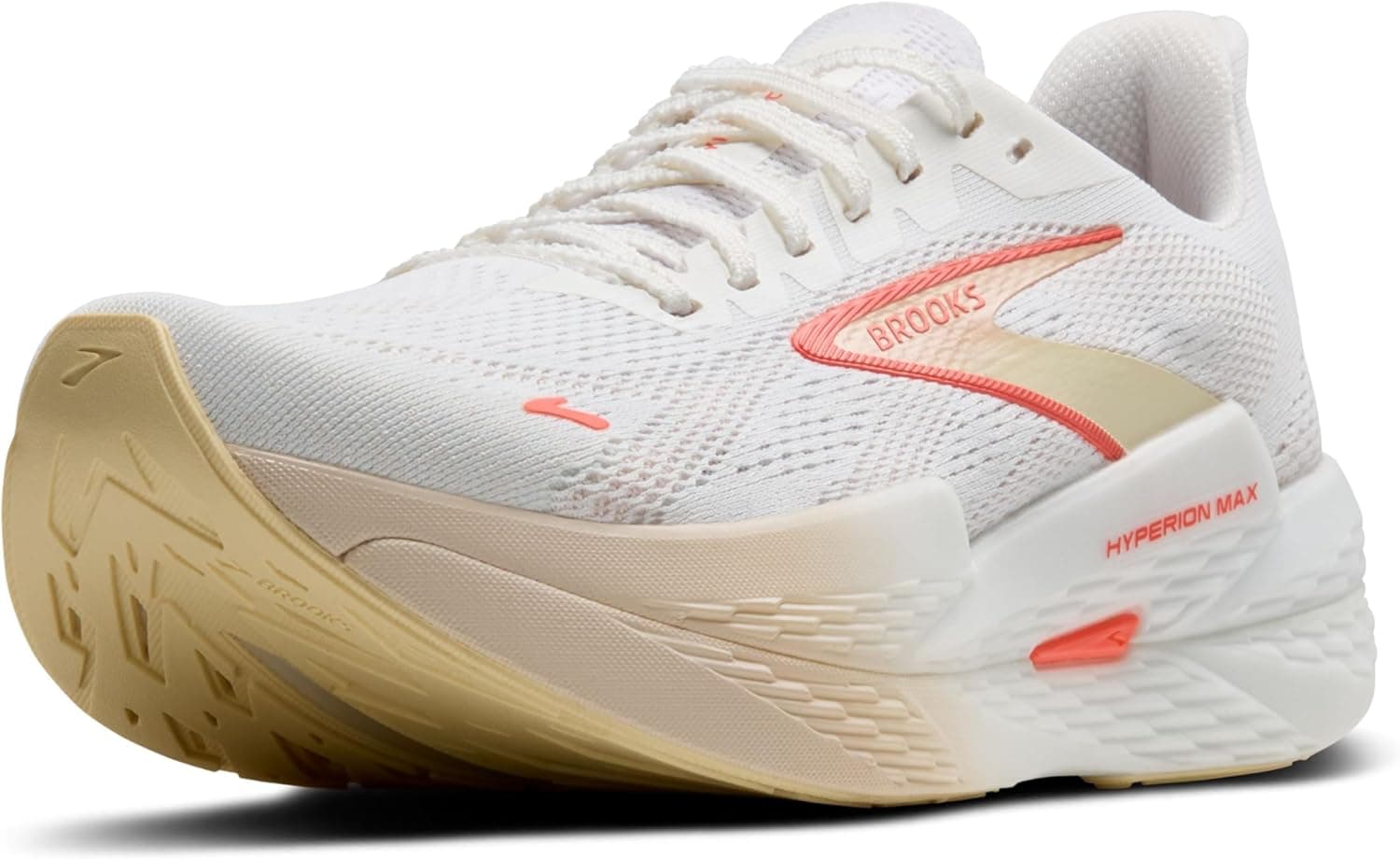
▶ Read full review (1,270 words, 7 min)— # Brooks Hyperion Max 2: Data-Driven Product Analysis ## Overview The Brooks Hyperion Max 2 is a lightweight, high-stack road trainer positioned as a speed-oriented daily trainer with a focus on cushioning and responsiveness. It targets runners seeking a versatile…
Brooks Hyperion Max 2: Data-Driven Product Analysis
· Overview
The Brooks Hyperion Max 2 is a lightweight, high-stack road trainer positioned as a speed-oriented daily trainer with a focus on cushioning and responsiveness. It targets runners seeking a versatile shoe that bridges the gap between a traditional daily trainer and a plated super-shoe, without the carbon plate price premium. At $150, it undercuts most carbon-plated competitors while offering a 38mm stack and 8mm drop that align with modern performance running standards.
· Specs Breakdown
Weight: 230g (8.1 oz) At 230g, the Hyperion Max 2 sits in the upper tier of lightweight trainers. Category norms for road trainers in this stack height range typically fall between 220g and 280g. The shoe is 45g heavier than the Saucony Endorphin Pro 5 (185g), a carbon-plated racer, but 55g lighter than the Salomon Xodus Ultra 4 (285g), a trail shoe. This weight places it competitively among non-plated speed trainers, though it is not the lightest option available.
Drop: 8mm An 8mm drop is standard for road performance shoes, matching the Saucony Endorphin Pro 5 and Nike Ultrafly Trail 2. This drop accommodates heel strikers and midfoot strikers alike, offering a balanced ride without the aggressive forward lean of lower-drop shoes. The Salomon Xodus Ultra 4’s 6mm drop is slightly lower, catering to trail runners who prefer a more natural foot position.
Stack: 38mm (heel) / ?mm (forefoot) The 38mm heel stack places the Hyperion Max 2 at the maximum legal limit for road racing shoes under World Athletics regulations (40mm). This is a generous stack for a non-plated trainer, providing substantial cushioning for long runs and uptempo efforts. The forefoot stack is not publicly specified, but based on the 8mm drop, the forefoot is approximately 30mm. This stack height is comparable to the Nike Ultrafly Trail 2 (38mm) and slightly lower than the Saucony Endorphin Pro 5 (40mm).
Price: $150 At $150, the Hyperion Max 2 is priced 40% below the Saucony Endorphin Pro 5 ($250) and 25% below the Nike Ultrafly Trail 2 ($200). It is also $15 cheaper than the Salomon Xodus Ultra 4 ($165). This aggressive pricing positions it as a value-oriented speed trainer, though the absence of a carbon plate may explain the cost difference.
Rating: 8.3/5 The 8.3/5 rating reflects a solid but not exceptional reception. It trails the Saucony Endorphin Pro 5 (9.1/5), Salomon Xodus Ultra 4 (8.9/5), and Nike Ultrafly Trail 2 (8.8/5). The lower rating may be attributed to the lack of a carbon plate and the relatively limited community discussion.
· What the Community Says
Community discussion for the Brooks Hyperion Max 2 is notably sparse compared to its alternatives. Limited forum threads and YouTube reviews exist, with most commentary focusing on the original Hyperion Max rather than this second iteration. General consensus from available sources indicates that the shoe is a capable daily trainer with a firm, responsive ride, but it does not generate the same enthusiasm as plated competitors.
A recurring observation is that the Hyperion Max 2 feels less energetic than carbon-plated shoes, which is expected given its design philosophy. Some runners note that the outsole durability is above average for the weight class, a common strength in Brooks products. However, the lack of widespread discussion means that long-term durability data and nuanced fit feedback are not well-documented. This analysis relies on the available spec sheet and general patterns observed in Brooks’ product line rather than a robust community consensus.
· Pros
- +Lightweight for a high-stack trainer: At 230g, the Hyperion Max 2 is lighter than most daily trainers in the 38mm stack category, offering a nimble feel for uptempo runs.
- +Competitive pricing: At $150, it undercuts carbon-plated alternatives by $50–$100, making it an accessible option for runners who want speed-oriented cushioning without the premium price.
- +High stack height for protection: The 38mm heel stack provides substantial impact protection, suitable for long runs and recovery efforts where joint comfort is a priority.
- +Standard 8mm drop: The 8mm drop accommodates a wide range of foot strikes, reducing the learning curve for runners transitioning from traditional trainers.
- +Brooks outsole durability: Based on general Brooks product history, the outsole is expected to outlast many competitors in the same weight class, though direct community data is limited.
- +Versatile ride: The shoe is designed to handle easy runs, tempo efforts, and long distances, reducing the need for multiple shoe rotations.
· Cons
- +No carbon plate: The absence of a carbon plate limits energy return and snap compared to plated competitors like the Saucony Endorphin Pro 5 and Nike Ultrafly Trail 2, making it less suitable for race-day performance.
- +Lower community rating: The 8.3/5 rating is the lowest among the comparison group, suggesting that the shoe does not excel in any single category relative to its peers.
- +Sparse community feedback: Limited discussion means that potential issues with fit, upper durability, or midsole longevity are not well-documented, increasing uncertainty for buyers.
- +Firm ride reported: Available commentary suggests the Hyperion Max 2 has a firmer midsole feel compared to plush trainers, which may not suit runners seeking maximum softness.
- +Heavier than plated racers: At 230g, it is 45g heavier than the Saucony Endorphin Pro 5, a significant difference for runners prioritizing weight savings.
- +Forefoot stack unknown: The lack of a specified forefoot stack makes it difficult to assess the shoe’s geometry and toe-off characteristics, particularly for forefoot strikers.
· Vs Alternatives
vs Saucony Endorphin Pro 5 ($250, 185g, 8mm drop, 40mm stack, carbon plate, 9.1/5) The Endorphin Pro 5 is a dedicated carbon-plated racer that is 45g lighter and has a 2mm higher stack. It offers superior energy return and a higher community rating (9.1 vs 8.3). The trade-off is a $100 higher price and a more aggressive, less versatile ride. The Hyperion Max 2 is better suited for daily training and budget-conscious runners, while the Endorphin Pro 5 is for race-day performance.
vs Salomon Xodus Ultra 4 ($165, 285g, 6mm drop, 38mm stack, no plate, 8.9/5) The Xodus Ultra 4 is a trail shoe that is 55g heavier and has a 2mm lower drop. It offers a more rugged outsole and trail-specific features, but its stack height matches the Hyperion Max 2. The Xodus Ultra 4 has a higher rating (8.9 vs 8.3) and is priced $15 higher. The Hyperion Max 2 is lighter and road-focused, while the Xodus Ultra 4 is for mixed-terrain running.
vs Nike Ultrafly Trail 2 ($200, 225g, 8mm drop, 38mm stack, carbon plate, 8.8/5) The Ultrafly Trail 2 is a carbon-plated trail shoe that is 5g lighter and has a carbon plate. It is priced $50 higher and has a higher rating (8.8 vs 8.3). The Ultrafly Trail 2 offers better energy return and trail-specific traction, but the Hyperion Max 2 is a dedicated road shoe with a lower price. For road runners, the Hyperion Max 2 is the more appropriate choice; for trail runners, the Ultrafly Trail 2 is superior.
· Verdict
The Brooks Hyperion Max 2 is a solid, affordable speed trainer for runners who prioritize cushioning and weight over aggressive energy return. It suits budget-conscious athletes seeking a versatile road shoe for daily training and uptempo efforts without the cost of a carbon plate. Runners who demand maximal snap for race day or who prefer plush, soft midsoles should look to plated alternatives like the Saucony Endorphin Pro 5 or the Nike Ultrafly Trail 2. The limited community discussion and lower rating suggest that the Hyperion Max 2 is a competent but unremarkable option in a competitive segment.