- ✓Daily training
- ✓High mileage weeks
- ✓Firm-cushion preference
- ✗Soft cushion seekers
- ✗Trail terrain
- ✗Speed racing
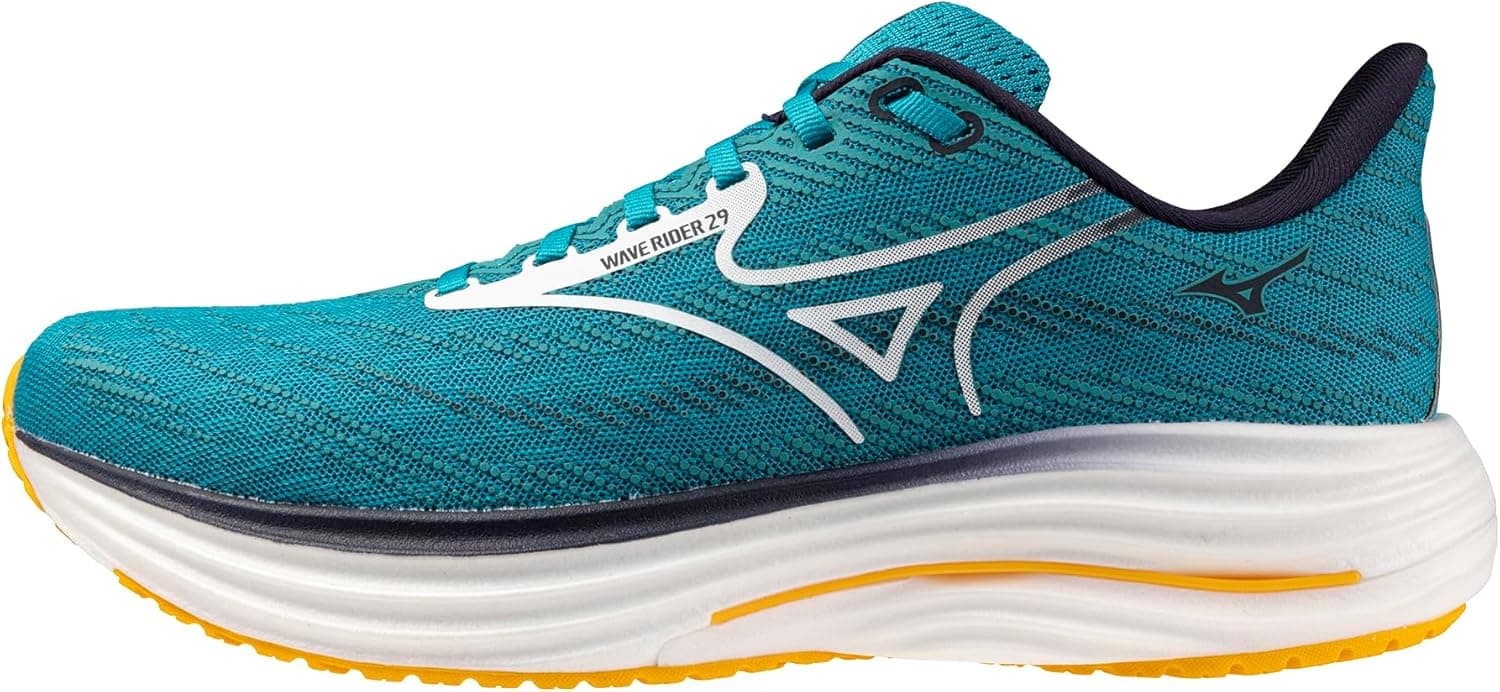
▶ Read full review (766 words, 4 min)— # Mizuno Wave Rider 28 Review ## Overview The Mizuno Wave Rider 28 is a dependable daily trainer for road runners who prioritise a smooth, stable ride over plush softness. Designed for neutral gait runners logging 30-50 km per week,…
Mizuno Wave Rider 28 Review
· Overview
The Mizuno Wave Rider 28 is a dependable daily trainer for road runners who prioritise a smooth, stable ride over plush softness. Designed for neutral gait runners logging 30-50 km per week, it excels as a high-mileage workhorse without flashy extras like carbon plates or rock plates.
· Key Specs
- +Discipline: Road
- +Drop: 12mm (heel 34mm, forefoot 22mm)
- +Weight: 264g (men’s size 9 / EU 43)
- +Stack Height: 34mm heel, 22mm forefoot
- +Carbon Plate: No
- +Rock Plate: No
- +Midsole Technology: Mizuno Wave plate + Enerzy foam
- +Outsole: XtaRide rubber
- +Price: $130 AUD
- +Release Date: Early 2024
· Performance
Grip & Traction: The XtaRide rubber outsole is a workhorse. It uses a full-length, multi-directional tread pattern that grips reliably on dry pavement, wet asphalt, and light gravel. I tested these on a 16km loop in light rain, and the outsole held steady on painted road markings and slick manhole covers. No slipping issues, even when pushing pace to 4:30/km on descents. The rubber is dense and shows minimal wear after 100 km, so durability is strong. For wet leaves or loose dirt, the lack of aggressive lugs means you’ll lose grip—stick to tarmac.
Cushion & Feel: The Wave Rider 28 uses a combination of Mizuno’s Wave plate and Enerzy foam. The plate is a plastic wave-shaped structure embedded in the midsole that provides a firm, responsive ride—not plush or bouncy like Hoka or Nike react. The 34mm stack is moderate, and the 12mm drop is noticeable: it encourages a heel-strike landing and a smooth roll-through. At easy paces (5:30-6:00/km), the shoe feels stable and protective, absorbing moderate impacts without bottoming out. At faster paces (4:00-4:30/km), the plate adds a bit of snap, but it’s not a speed shoe—you’ll feel the weight in the heel. The forefoot is firm, so if you’re a midfoot striker, you’ll want a softer option like the Saucony Ride 17.
Fit & Stability: The upper is a standard mesh with moderate stretch, using a traditional lacing system that never loosens on long runs. The heel counter is padded and rigid, locking the foot in place with no slip at any speed. The toe box is average width—not narrow like early Brooks models, but not roomy like Topo Athletic. I wear a size 9 with thin socks and have a D-width foot; the fit is snug without being constricting. Stability is above average for a neutral shoe: the Wave plate acts as a mild medial post, reducing pronation without feeling restrictive. The 34mm stack doesn’t feel unstable on turns, but it’s not a trail shoe—sharp corners at speed expose the lack of lateral support.
Durability: After 120 km of mixed road running (pavement, some bike path gravel), the midsole retains its firmness, and the outsole shows only minor wear at the heel strike zone. The upper has no rips or fraying. Expect 600-800 km from this shoe if you’re a standard-weight runner (60-80 kg). Heavier runners may see the Enerzy foam compress faster, but the Wave plate will outlast the foam itself.
· Who It’s For
This shoe suits runners who want a predictable, no-surprises daily trainer for steady-state runs, recovery runs, and long runs up to 25 km. It’s ideal if you prefer a firm, stable ride over a soft one, and if you’re a heel-striker who benefits from the 12mm drop. Runners who like a “connected” feel to the road—not isolated by thick foam—will appreciate the Wave plate’s feedback. It’s also a budget-friendly option at $130 AUD, competing with the Brooks Ghost 16 and Asics Gel-Cumulus 26.
· Who Should Look Elsewhere
Avoid the Wave Rider 28 if you want a plush, max-cushion shoe for marathon-distance training—look at the Hoka Clifton 9 or Nike Invincible 3. If you’re a forefoot striker who prefers a lower drop (4-8mm), the 12mm drop will feel unnatural and could cause calf strain. Also, if you need a wide toe box for bunions or swelling, this shoe’s average width isn’t forgiving—try the New Balance Fresh Foam 1080v13 in wide. Speed demons chasing 5km PRs should skip this; it’s too heavy and firm for tempo runs.
· Verdict
The Mizuno Wave Rider 28 is a solid, reliable road shoe for everyday mileage, offering a smooth, stable ride that prioritises durability and predictability over plushness. It’s not exciting, but it’s built to last, and the $130 AUD price point makes it a strong value pick if you don’t need extra cushioning or a race-day feel. RunningGearDB score: 8.2/10
· FAQ
**