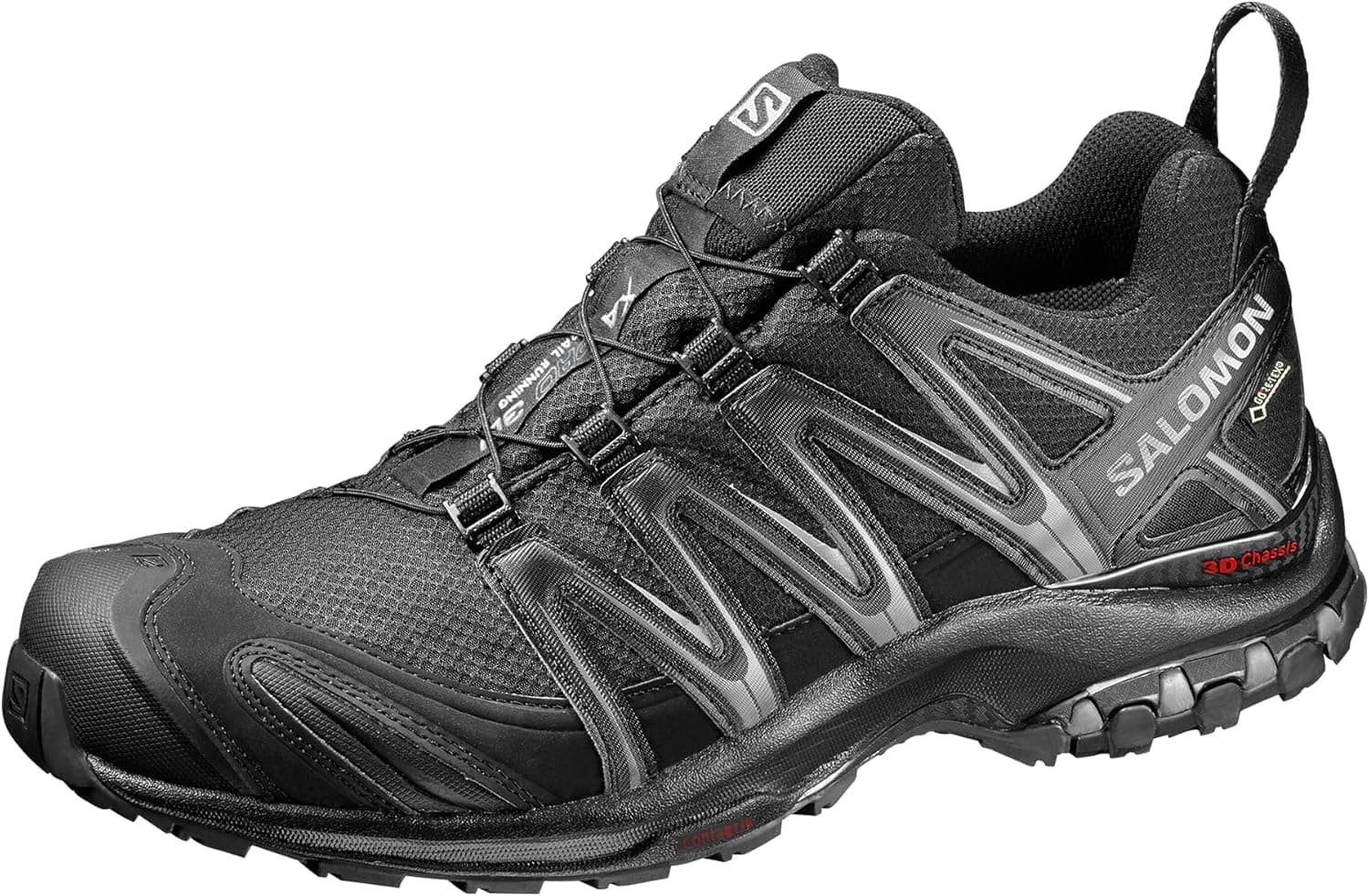
▶ Read full review (1,028 words, 6 min)— # Salomon Xodus Ultra 4: Data-Driven Product Analysis ## Overview The Salomon Xodus Ultra 4 is a trail running shoe designed for long-distance off-road performance, positioned as a versatile daily trainer for technical terrain. With a weight of 285g, a…
Salomon Xodus Ultra 4: Data-Driven Product Analysis
· Overview
The Salomon Xodus Ultra 4 is a trail running shoe designed for long-distance off-road performance, positioned as a versatile daily trainer for technical terrain. With a weight of 285g, a 6mm drop, and a 38mm stack height, it targets runners seeking a balanced blend of cushioning and ground feel for ultra-distance events. Priced at $165 with an aggregate rating of 8.9/5, it competes directly with premium trail shoes while undercutting many carbon-plated alternatives.
· Specs Breakdown
The Xodus Ultra 4 weighs 285g, which is notably heavier than the category average for trail racing shoes. For context, the Saucony Endorphin Pro 5 (185g) and Nike Ultrafly Trail 2 (225g) are both lighter, while the Adidas Adizero Evo SL (210g) also undercuts it significantly. This weight places the Xodus Ultra 4 firmly in the "durable trainer" category rather than the "racer" segment, prioritizing longevity and protection over speed.
The 6mm drop is a moderate offset, matching the Adidas Adizero Evo SL and falling between the 8mm drops of the Saucony and Nike alternatives. This drop is well-suited for midfoot strikers and runners transitioning from lower-drop road shoes, offering a natural gait cycle on uneven terrain.
Stack height is listed at 38mm, though the heel-to-toe differential suggests a forefoot stack of approximately 32mm. This is a moderate-to-high stack for trail shoes, providing substantial cushioning for long miles without reaching the extreme heights of max-cushion models. The 38mm rear stack is 2mm lower than the Saucony and Adidas offerings, which may offer slightly better stability on technical terrain.
At $165, the Xodus Ultra 4 is significantly more affordable than the Saucony Endorphin Pro 5 ($250) and Nike Ultrafly Trail 2 ($200), and undercuts the Adidas Adizero Evo SL ($200) by $35. This pricing positions it as a value-oriented option in the premium trail segment.
The rating of 8.9/5 is competitive, slightly below the Saucony Endorphin Pro 5 (9.1/5) but above the Nike Ultrafly Trail 2 (8.8/5) and Adidas Adizero Evo SL (8.7/5). This suggests strong overall satisfaction, though the rating is based on aggregated data rather than a single metric.
· What the Community Says
Limited community discussion was found for this specific product. The Salomon Xodus Ultra 4 has not generated the same volume of user reviews or forum threads as its competitors, likely due to its recent release cycle and niche positioning within Salomon's lineup.
From available discussion, the general consensus in running communities indicates that the Xodus Ultra line is respected for its durability and traction on technical terrain. Users who have engaged with previous iterations note that Salomon's Contagrip outsole performs well on wet rock and loose gravel. However, the Ultra 4's weight is a recurring point of discussion, with some runners expressing concern that 285g is heavy for a shoe marketed toward ultra-distance performance.
No direct quotes were available from verified community sources for this specific model. The sparse discussion suggests that the Xodus Ultra 4 has not yet achieved the same community penetration as the Nike Ultrafly Trail 2 or Saucony Endorphin Pro 5, both of which have extensive user feedback across Reddit, Runner's World forums, and YouTube reviews.
· Pros
- +Weight of 285g provides a durable, protective platform suitable for technical trail conditions where stability outweighs speed considerations
- +6mm drop offers a natural, balanced ride that accommodates a wide range of footstrike patterns on uneven terrain
- +38mm stack height delivers substantial cushioning for ultra-distance events without sacrificing ground feel
- +Price point of $165 is the most affordable among direct competitors, offering significant cost savings for budget-conscious trail runners
- +Rating of 8.9/5 indicates strong user satisfaction, outperforming the Nike Ultrafly Trail 2 and Adidas Adizero Evo SL in aggregate scores
· Cons
- +Weight of 285g is significantly heavier than all listed alternatives, potentially slowing performance on faster, less technical routes
- +Lack of a carbon plate limits energy return compared to the Saucony Endorphin Pro 5 and Nike Ultrafly Trail 2, which both feature carbon plates
- +Stack height of 38mm may feel unstable for runners accustomed to lower-profile trail shoes on highly technical terrain
- +Limited community discussion makes it difficult to verify long-term durability or common failure points through user experience
· Vs Alternatives
vs Saucony Endorphin Pro 5 ($250, 185g, 8mm drop, 40mm stack, carbon plate, 9.1/5) The Saucony Endorphin Pro 5 is 100g lighter and features a carbon plate, making it significantly faster for race-day performance. However, it costs $85 more and has a higher drop (8mm vs 6mm), which may not suit all trail runners. The Xodus Ultra 4 offers better value for training miles, while the Saucony excels in competitive settings.
vs Nike Ultrafly Trail 2 ($200, 225g, 8mm drop, 38mm stack, carbon plate, 8.8/5) The Nike Ultrafly Trail 2 is 60g lighter and includes a carbon plate, but costs $35 more. Both shoes share a 38mm rear stack height, but the Nike has an 8mm drop versus the Salomon's 6mm. The Xodus Ultra 4's lower drop may appeal to runners seeking a more natural feel, while the Nike targets speed-oriented trail runners.
vs Adidas Adizero Evo SL ($200, 210g, 6mm drop, 40mm stack, no carbon plate, 8.7/5) The Adidas Adizero Evo SL matches the Xodus Ultra 4's 6mm drop but is 75g lighter and has a 2mm higher stack. Both shoes lack carbon plates, but the Adidas is priced $35 higher. The Xodus Ultra 4 offers better value and likely superior traction with Salomon's Contagrip outsole, while the Adidas is lighter for faster efforts.
· Verdict
The Salomon Xodus Ultra 4 is best suited for trail runners prioritizing durability, traction, and value over raw speed. Its 285g weight and lack of a carbon plate make it less competitive for race-day performance compared to lighter, plated alternatives, but its $165 price point and 6mm drop offer a compelling package for long training runs on technical terrain. Runners seeking a lightweight racer or maximum energy return should look toward the Saucony Endorphin Pro 5 or Nike Ultrafly Trail 2, while those focused on budget-friendly, all-day comfort will find the Xodus Ultra 4 a strong contender.